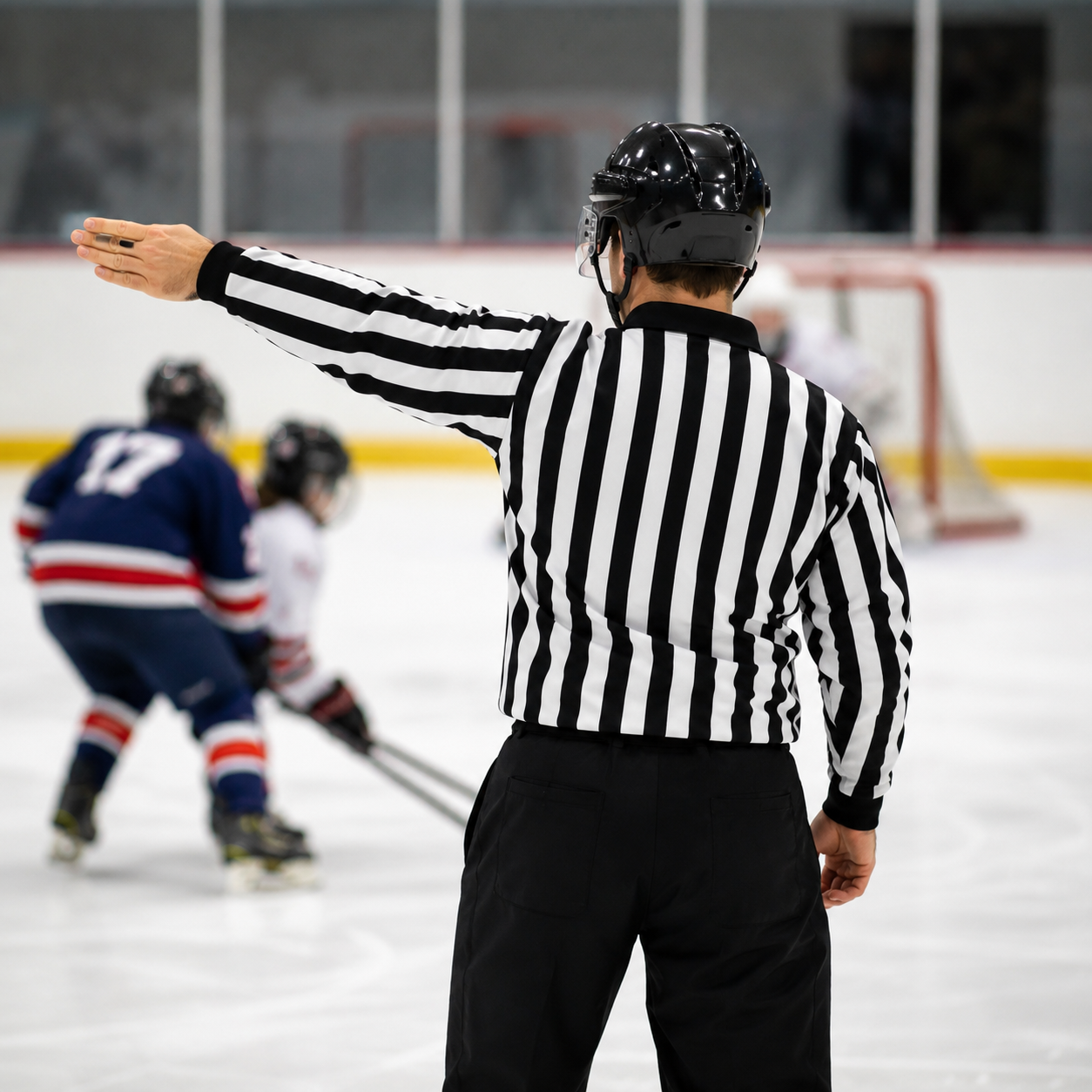
Become an On-Ice Official
Develop confidence, leadership and decision-making skills while helping create a safe, fair and positive hockey experience.
Why Become an Official?
Officiating is a rewarding way to stay involved in hockey, develop valuable skills and contribute to the game. Officials receive training and support while progressing through the Hockey Canada Officiating Program.
Build Confidence
Develop communication, decision-making and conflict-management skills in a fast-paced environment.
Stay Involved in Hockey
Remain connected to the game while learning it from a new perspective.
Make the Game Possible
Help provide a safe, fair and enjoyable experience for players, coaches and families.

New Officials
Interested in becoming an on-ice official for the 2026–2027 season? Review the eligibility requirements and application process below.
Complete the Prerequisites
Complete the required Hockey Canada or BC Hockey online prerequisite training and submit proof of completion to the SMHA Referee-in-Chief.
Receive Confirmation
SMHA reviews eligible applicants. When applications exceed available spaces, siblings of current officials receive priority and remaining applicants may be selected through a lottery. Successful applicants are contacted directly.
Attend the Certification Clinic
Accepted applicants must register for and complete the required Hockey Canada Officiating Program clinic, including both the classroom and on-ice components.
Interested in Becoming an Official?
Contact Jamie Versteeg, SMHA Referee-in-Chief, for current application instructions, deadlines and certification clinic information. 604-817-6814
Returning Officials
Returning officials must complete the required annual recertification process to maintain their Hockey Canada Officiating Program certification for the upcoming season.
Complete or Renew Your Criminal Record Check
Officials who are 18 years of age or older as of December 31 must have a valid Criminal Record Check before registering for an in-person certification clinic. If your current CRC is still valid, you do not need to complete a new one. CRCs are generally valid for three seasons.
Complete Online Recertification
Complete the annual Hockey Canada Officiating Program online recertification course that corresponds with your certification level. The course is completed through the Hockey Canada Learning Lab and must be finished before registering for the in-person clinic.
Register for an In-Person Clinic
Once the required prerequisites are complete, register for the appropriate BC Hockey in-person recertification clinic. Officials should register early once clinic dates become available, as capacity may be limited.
Confirm Your Certification Level
Register for the certification level appropriate to your age, experience and current BC Hockey requirements. Confirm your level before completing online recertification or registering for a clinic.
Check Your Current Status Before You Begin
Certification requirements depend on age, experience and current BC Hockey requirements. Returning officials can check their Criminal Record Check status through their Spordle account and should confirm the appropriate certification level before registering.
Official Development & Expectations
SMHA officials are expected to demonstrate professionalism, fairness and respect while continuing to develop their knowledge and on-ice skills.
Safety First
Recognize and address situations that may threaten player safety.
Fair & Consistent
Apply the rules objectively and consistently, regardless of the teams or players involved.
Respectful Communication
Handle disagreements firmly and professionally while treating players, coaches and spectators with dignity.
Continued Development
Attend required training, accept constructive feedback and continue building officiating knowledge and skills.
All officials are expected to follow the applicable Hockey Canada, BC Hockey, PCAHA and SMHA standards of conduct.

Assigning, Game Changes & Feedback
Current officials and team managers can use the information below for referee assignments, game changes and officiating feedback.
01 How Are Officials Assigned?
For lower divisions and categories, officials may be assigned through the SMHA Referee-in-Chief or delegate. Higher divisions are assigned through the PCAHA Referee Assigning Centre according to current PCAHA rules and procedures.
02 What If a Game Changes?
Team managers should follow the current game-change process and provide as much notice as possible when a game is rescheduled or cancelled. Changes may require notification through the appropriate League Manager and referee assigning process.
03 How Do I Provide Feedback About an Official?
Questions, concerns or constructive feedback regarding an SMHA official should be directed to the Referee-in-Chief rather than addressed directly with the official following a game.
Contact the Referee-in-Chief
For questions about assigning, game changes, officiating procedures or feedback, contact the SMHA Referee-in-Chief.
Frequently Asked Questions
Contact Jamie Versteeg, Referee-in-Chief if you need assistance.
-
For the 2026–2027 SMHA intake, applicants must be born in 2014 or earlier, subject to current program requirements and available spaces.
-
No. New officials complete prerequisite learning and certification before receiving assignments.
-
No. Assignments depend on certification, readiness, availability, association needs and the number of officials in the program. Langley similarly notes that it cannot guarantee a specific number of first-year assignments.
-
Officials aged 18 and older require a valid Criminal Record Check. Processing can take time, so it should be completed well before clinic registration.
-
Contact Jamie Versteeg, SMHA Referee-in-Chief:
ric@surreyminorhockey.com
604-817-6814

Officiating Resources
BC Hockey Officiating
Certification, recertification, clinics and officiating program information.
Hockey Canada Officiating Pathway
Learn about officiating levels, certification pathways and official development.
PCAHA Referee Information
Regional officiating information, referee assigning and league resources.
Hockey Canada Rule Book
Current playing rules, interpretations and officiating guidance.